

Best Comedy Films of the 1990s

Updated: Jul 1, 2025

The 1990s was a golden era for comedy, where big laughs met sharp writing, quirky characters, and genre-defying innovation. From slapstick absurdity to indie darlings, the decade blended mainstream success with experimental flair, producing films that remain endlessly quotable and culturally iconic.
Top Comedy Films by Year
Comedy Trends of the 1990s
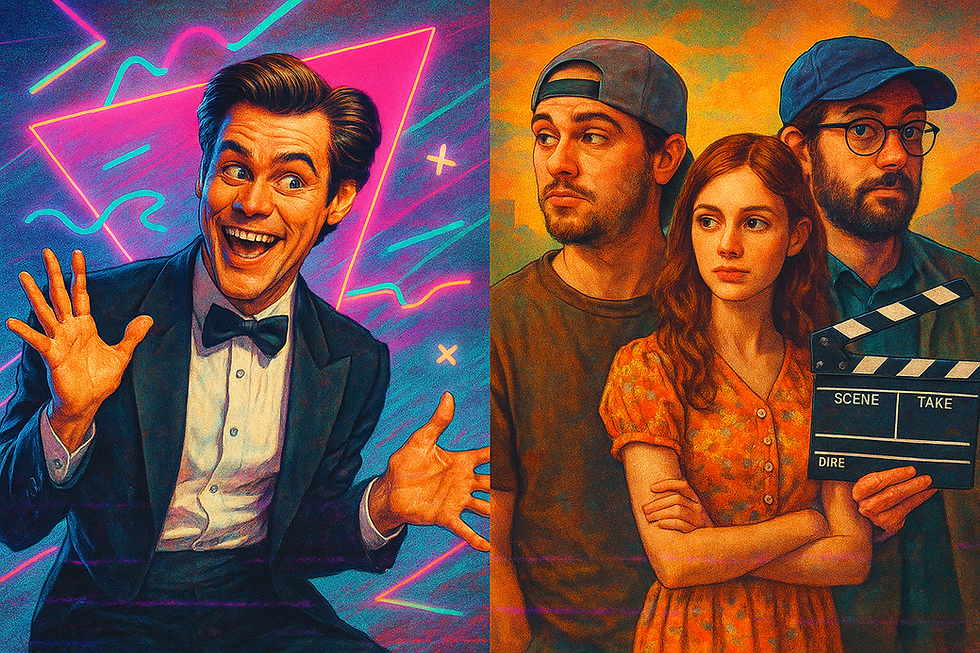
Explosion of High-Concept Comedies
The '90s embraced clever premises and big comedic hooks—what if a man relives the same day endlessly, or a pet detective takes on a missing dolphin case? These high-concept setups led to unforgettable classics.
Rise of Star-Driven Vehicles
Comedians like Jim Carrey, Adam Sandler, Whoopi Goldberg, and Robin Williams became box office powerhouses, headlining films tailored to their signature styles.
Alternative & Indie Comedy Flourishes
Offbeat voices from the indie world—like the Coen Brothers, Kevin Smith, and Wes Anderson—brought dry wit, irony, and stylized storytelling into the mainstream.
10 Must-Watch Comedy Films of the 1990s
Groundhog Day (1993)
Runtime: 1hr 41min
Groundhog Day, directed by Harold Ramis, follows cynical TV weatherman Phil Connors (played by Bill Murray), who is sent to Punxsutawney, Pennsylvania, to cover the annual Groundhog Day festivities. After a dismissive and grumpy day of reporting, Phil wakes up the next morning only to realize he’s reliving the same day—again and again. As the time loop continues indefinitely, Phil goes through stages of confusion, indulgence, despair, and eventually, self-reflection.
The film cleverly blends high-concept fantasy with philosophical depth and heartfelt comedy. As Phil starts to change his attitude and take genuine interest in the lives of the townspeople, he transforms from a self-centered egotist into a compassionate and thoughtful man. Groundhog Day is not just a romantic comedy or a supernatural mystery—it’s a surprisingly profound exploration of personal growth, meaning, and second chances. Its legacy as both a cultural touchstone and a spiritual allegory has only grown over time.
Dumb and Dumber (1994)
Runtime: 1hr 47min
Dumb and Dumber (1994), directed by Peter Farrelly, is a slapstick road-trip comedy that follows two well-meaning but hopelessly dimwitted friends, Lloyd Christmas (Jim Carrey) and Harry Dunne (Jeff Daniels). When Lloyd finds a briefcase left behind by a woman he falls for at the airport, the two friends embark on a cross-country journey from Providence, Rhode Island, to Aspen, Colorado, to return it—unaware that the briefcase is actually ransom money linked to a kidnapping.
The film thrives on its absurd humor, cartoonish physical gags, and the genuine chemistry between Carrey and Daniels, who fully commit to their outrageously clueless roles. Despite their lack of intelligence, Lloyd and Harry’s loyalty and optimism give the film a bizarre charm that’s made it a cult classic. Dumb and Dumber doesn’t aim for complexity or nuance; it celebrates idiocy in the purest form, delivering nonstop laughs while creating two of the most iconic buffoons in comedy history.
Clueless (1995)
Runtime: 1hr 37min
Clueless, directed by Amy Heckerling, is a witty and stylish teen comedy loosely based on Jane Austen’s Emma. Set in the opulent world of Beverly Hills high schoolers, the film follows Cher Horowitz (Alicia Silverstone), a fashion-forward, well-meaning but superficial teenager who plays matchmaker for her friends and teachers. When she takes new student Tai (Brittany Murphy) under her wing, Cher’s attempts to transform her lead to unexpected consequences—and ultimately force Cher to reevaluate her own values and identity.
With its razor-sharp dialogue, iconic 90s fashion, and a surprisingly tender heart, Clueless redefined the teen comedy genre. It blends satire with sincerity, portraying the high school social hierarchy with both humor and insight. Silverstone’s performance made Cher an enduring cultural icon—vapid yet lovable, naïve yet earnest. More than just a light teen flick, the film’s clever writing and emotional undercurrents have cemented its legacy as one of the smartest and most quotable comedies of its decade.
The Big Lebowski (1998)
Runtime: 1hr 57min
The Big Lebowski, directed by Joel and Ethan Coen, is a surreal, offbeat comedy that centers on Jeffrey "The Dude" Lebowski (Jeff Bridges), an aging slacker and avid bowler who becomes entangled in a complex kidnapping plot after being mistaken for a millionaire with the same name. What begins as a simple case of mistaken identity spirals into a bizarre adventure involving nihilists, porn tycoons, avant-garde artists, and a stolen rug that "really tied the room together."
Blending noir tropes with absurdist humor, The Big Lebowski defies traditional storytelling, leaning instead on eccentric characters, strange detours, and philosophical musings disguised as stoner logic. Jeff Bridges’ iconic performance as The Dude, along with a stellar supporting cast—John Goodman, Julianne Moore, Steve Buscemi—has turned the film into a cult classic. Initially overlooked, the movie has grown in stature over the years, praised for its idiosyncratic dialogue, layered irony, and meditative weirdness that rewards repeat viewings.
Mrs. Doubtfire (1993)
Runtime: 2hr 6min
Mrs. Doubtfire, directed by Chris Columbus, is a heartwarming comedy about Daniel Hillard (Robin Williams), a loving but immature father who loses custody of his children after a divorce. In a desperate attempt to spend more time with them, he disguises himself as a British nanny named Euphegenia Doubtfire and gets hired by his ex-wife Miranda (Sally Field) to care for the kids. As Daniel juggles his double life, he learns valuable lessons about responsibility, parenting, and personal growth.
The film balances broad comedy with genuine emotional depth, largely thanks to Robin Williams’ unforgettable performance that blends slapstick humor, heartfelt sincerity, and rapid-fire impressions. Mrs. Doubtfire resonates as more than a cross-dressing farce—it’s a touching story about family, forgiveness, and the lengths a parent will go to for their children. Its blend of laughter and sentiment made it a massive box office success and a lasting favorite for audiences of all ages.
Office Space (1999)
Runtime: 1hr 29min
Office Space, written and directed by Mike Judge, is a sharp workplace satire that follows Peter Gibbons (Ron Livingston), a disillusioned tech company employee trapped in a mind-numbing cubicle job. After a hypnotism session gone wrong, Peter stops caring about work entirely—only to be mistakenly promoted by his clueless bosses. Alongside his disgruntled coworkers, he hatches a plan to embezzle money from the company in small, undetectable amounts.
With its deadpan humor, relatable frustrations, and iconic characters like the painfully awkward Bill Lumbergh and the stapler-obsessed Milton, Office Space captures the absurdity of corporate life with biting accuracy. Though it underperformed at the box office upon release, the film became a cult classic on home video, striking a chord with anyone who’s ever endured fluorescent lights, pointless memos, and soul-crushing monotony. It remains one of the most beloved comedies about workplace disillusionment and quiet rebellion.
Austin Powers: International Man of Mystery (1997)
Runtime: 1hr 35hr
Austin Powers: International Man of Mystery, directed by Jay Roach and written by its star Mike Myers, is a zany spy spoof that parodies 1960s James Bond-style thrillers. The film follows Austin Powers, a flamboyant British secret agent frozen in the '60s and thawed out in the '90s to combat his nemesis, the equally ridiculous Dr. Evil (also played by Myers). As Austin tries to adjust to modern norms, he teams up with the sensible Vanessa Kensington (Elizabeth Hurley) to stop Dr. Evil’s world domination plot.
Brimming with absurd humor, groovy visuals, and endless one-liners, Austin Powers thrives on its gleeful commitment to silliness and satire. Mike Myers’ dual performance as both hero and villain is packed with eccentric quirks, making both characters pop-culture icons. What could’ve been a one-note parody turned into a surprise hit that launched a franchise and brought retro spy kitsch roaring into the mainstream—along with catchphrases that defined late-’90s comedy.
Rushmore (1998)
Runtime: 1hr 33min
Rushmore, directed by Wes Anderson and co-written with Owen Wilson, is a quirky coming-of-age comedy that follows Max Fischer (Jason Schwartzman), an eccentric and overambitious teenager at the elite Rushmore Academy. Obsessed with extracurriculars but flunking his classes, Max becomes infatuated with a first-grade teacher, Rosemary Cross (Olivia Williams), and enters a strange love triangle with his much older friend, the melancholy industrialist Herman Blume (Bill Murray).
Blending deadpan humor, precise visual style, and a deeply personal narrative, Rushmore marked a turning point for American indie cinema and introduced Anderson’s signature aesthetic. At its heart, the film is about obsession, rejection, and finding your place in the world, told with emotional nuance and offbeat charm. Bill Murray’s restrained, poignant performance helped revitalize his career, and Schwartzman’s debut is unforgettable, making Rushmore both a stylistic breakthrough and a deeply relatable story about youthful ambition and vulnerability.
My Cousin Vinny (1992)
Runtime: 2hr
My Cousin Vinny, directed by Jonathan Lynn, is a courtroom comedy that follows two New Yorkers falsely accused of murder in rural Alabama—and the unlikely lawyer who comes to their defense: Vinny Gambini (Joe Pesci), a brash, loudmouthed cousin with zero trial experience and a law degree just barely earned. Accompanied by his sharp-witted fiancée Mona Lisa Vito (Marisa Tomei), Vinny must navigate Southern legal culture, skeptical judges, and his own inexperience to prove the boys’ innocence.
The film stands out for its razor-sharp dialogue, culture-clash humor, and genuinely clever legal plotting. Joe Pesci brings comedic brilliance to the role of Vinny, but it’s Marisa Tomei’s unforgettable performance—equal parts hilarious and heartfelt—that earned her an Academy Award. My Cousin Vinny succeeds as both a fish-out-of-water farce and a surprisingly accurate courtroom drama, making it a rare comedy that’s as smart as it is funny.
There’s Something About Mary (1998)
Runtime: 2hr 10min
There’s Something About Mary, directed by the Farrelly Brothers, is a raunchy romantic comedy that follows lovable underdog Ted Stroehmann (Ben Stiller) as he tries to reconnect with his high school crush, Mary Jensen (Cameron Diaz), years after a disastrous prom night mishap. Hiring a shady private investigator (Matt Dillon) to track her down, Ted soon finds himself competing with a parade of bizarre and deceitful suitors—all of whom are obsessed with Mary’s charm.
The film blends outrageous gross-out humor with genuine sweetness, redefining the boundaries of romantic comedy in the late ’90s. Cameron Diaz’s radiant performance made her an instant star, while Stiller and Dillon embraced physical and situational comedy to absurd extremes. Famous for its infamous zipper scene and hair gel gag, There’s Something About Mary became a massive hit, balancing shock value with heart and helping to usher in a new wave of boundary-pushing studio comedies.
Hidden Gems
Soapdish (1991)
Runtime: 1hr 37min
Soapdish, directed by Michael Hoffman, is a satirical comedy that skewers the melodrama and behind-the-scenes chaos of daytime soap operas. The film stars Sally Field as Celeste Talbert, a veteran soap star whose career is threatened by jealous co-stars, a scheming producer (Robert Downey Jr.), and the surprise return of a former flame (Kevin Kline) who’s recruited to destabilize her on-screen and off. As rivalries escalate and secrets unravel, the plot becomes just as outrageous as the show they’re filming.
With its fast-paced farce, over-the-top performances, and witty jabs at showbiz egos, Soapdish delivers both biting satire and affectionate parody. Sally Field leads a stellar ensemble cast that includes Whoopi Goldberg, Elisabeth Shue, and Cathy Moriarty, each embracing the film’s gleeful absurdity. The result is a campy, cleverly structured comedy that celebrates the ridiculousness of soap operas while poking fun at the egos and dysfunction that drive the entertainment industry.
The Ref (1994)
Runtime: 1hr 37min
The Ref, directed by Ted Demme, is a dark holiday comedy about a burglar, Gus (Denis Leary), who takes a bickering couple hostage on Christmas Eve—only to discover he’s trapped in a domestic warzone. Lloyd (Kevin Spacey) and Caroline (Judy Davis) are on the verge of divorce, and their constant sniping turns Gus’s simple robbery into a nightmare of family dysfunction, especially as meddling relatives arrive and chaos escalates.
Blending sharp dialogue with biting humor, The Ref flips the home invasion trope into a brutal—and hilarious—takedown of marital misery and holiday tension. Denis Leary’s fast-talking, exasperated performance anchors the film, while Spacey and Davis shine as the toxically funny couple. Though underappreciated upon release, The Ref has become a cult favorite for those who prefer their Christmas comedies with an edge and a heavy dose of dysfunction.
Wag the Dog (1997)
Runtime: 1hr 40min
Wag the Dog, directed by Barry Levinson, is a sharp political satire that imagines a White House in crisis just days before an election—when the president is caught in a sex scandal. To divert public attention, a spin doctor (Robert De Niro) teams up with a Hollywood producer (Dustin Hoffman) to fabricate a fake war in Albania, using media manipulation and cinematic tricks to rally the public and control the news cycle.
The film is both eerily prescient and wickedly funny, exposing how easily truth can be manufactured in the age of 24-hour media. Hoffman delivers a standout performance as the egotistical producer who treats war like a movie, complete with casting, theme songs, and staged footage. Wag the Dog is a biting commentary on spin culture, media spectacle, and the blurred lines between politics and entertainment—making it as relevant today as it was in the late ’90s.
Legacy of 1990s Comedy

Stars Made, Genres BlendedThe '90s launched the careers of many modern comedy legends while also breaking genre boundaries—from rom-com to gross-out, satire to slice-of-life.
Quotes That Never DiedFrom “You can’t handle the truth!” to “Yeah, baby!”, '90s comedy gave us a lexicon of unforgettable lines.
Continued InfluenceFilmmakers today still draw on the decade’s balance of wit, weirdness, and emotional depth—proving that the best '90s comedies are timeless.
Closing Thoughts

The 1990s proved comedy could be both mainstream and subversive, heartfelt and bizarre. Whether powered by iconic stars or indie sensibilities, the decade’s films continue to inspire laughter—and rewatches—decades later.


